
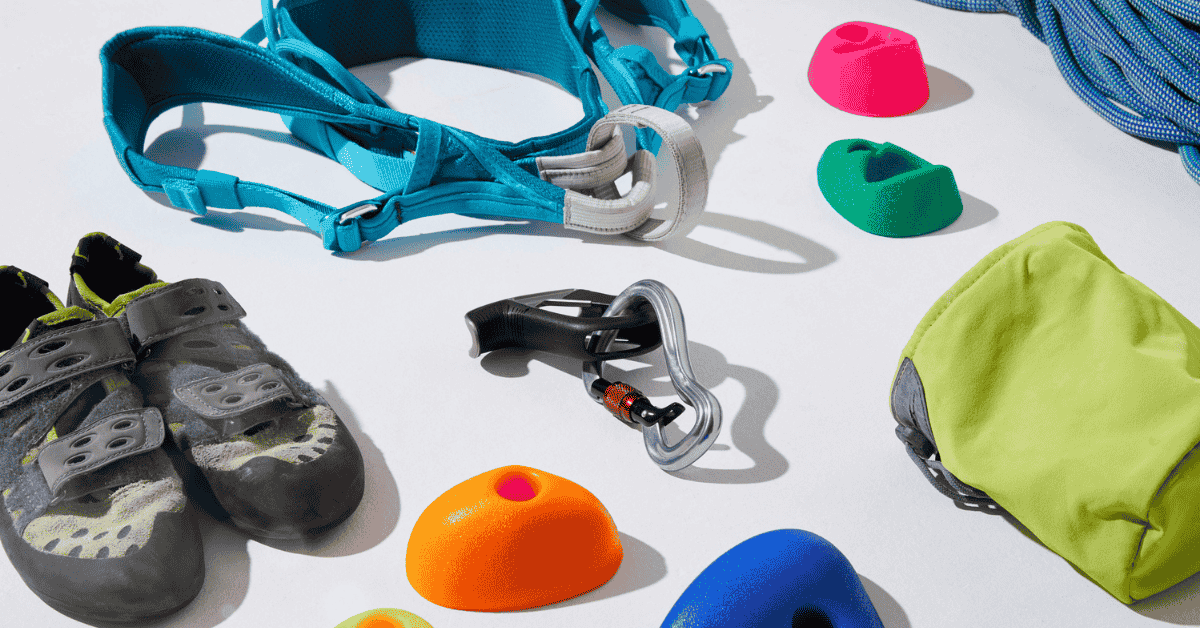
The rock climbing gear list for beginners includes climbing shoes, a harness, belay device, helmet, rope, carabiners, quickdraws, chalk, chalk bags, crash pads, climbing clothes, a climbing pack, an anchor kit, a hangboard, and other small accessories that fill the gaps. These are the basics. You need them to get on the wall and stay there safely.
This guide breaks it all down. You will learn what each item does, how to choose one, and why it matters, especially if you’re starting to explore more technical styles like fingertips-only rock climbing. You’ll finish knowing exactly what to buy and what can wait.
1. Climbing Shoes
Climbing shoes are more than just something to slip on. They give you the grip and precision you need to stand on a vertical rock without thinking, “Wait, I’m going to fall.” With the right fit, they give you the support to climb longer without that uncomfortable pinch. Think of them as an extension of your body. Because, in climbing, they are.

Best Climbing Shoes for Beginners
The La Sportiva Tarantulace wraps around your feet with a quick-pull lacing system that’s more efficient than you might expect. Your toes stay dry, and the cushioned top of your foot feels like it was designed with actual consideration for comfort.
If you’re looking for something that treats your feet well, the Scarpa Origin is a solid choice. The wide fit and soft heel tension make long climbing sessions more bearable.
With the Black Diamond Momentum, your feet finally get the space they deserve. The flat last allows your toes to stretch out instead of curling up in pain, which makes them perfect for extended sessions. The soft midsole makes it comfy, and the two Velcro straps give you the freedom to adjust the fit without a second thought.
2. Climbing Harness
Your harness is the thing that holds you together, literally. A good fit is key, especially when you’re in it for the long haul. If it’s digging into your hips or slipping around, you’re not going to last long.
Leg loops come in two main styles: fixed or adjustable. Fixed is straightforward, but adjustable gives you more flexibility, which can be a blessing when you need a more custom fit. When you’re out there, think about even weight distribution. You don’t want all your weight sitting on one part of your body, especially when you’re trying to focus on the climb, not on the pain in your lower back.
Padding is vital, too. If you’re in the harness for a while, you’ll be thankful for those extra layers of comfort.
Best Climbing Harness for Beginners
The Petzl Corax Harness is built for long hours on the wall. Its dual waistbelt adjustment and frame construction distribute weight evenly, giving you stability on overhangs and during lead falls. The gear loops are rigid for quick clipping, even when pumped. Breathable padding reduces pressure points so your focus stays on the crux, not discomfort.
The Black Diamond Momentum Harness features TrakFIT leg loops that adjust seamlessly to your frame. Whether you are leading your first route or projecting a tough problem, this harness keeps you secure and focused.
The Mammut Ophir 3 Slide Harness delivers precise fit with dual-layer webbing that flexes as you move. Its abrasion-resistant construction stands up to sharp rock and repeated whippers. Four rigid gear loops keep your rack organized, so your next cam or quickdraw is exactly where you need it.
If you’ve got a rock climbing gear list for beginners, this one should be on the top.
3. Belay Device
Your belay device should provide controlled braking and smooth handling. Look for a comfortable grip and assisted-locking features. Combine it with dynamic ropes that have dependable elongation and auto-locking carabiners. You have complete control over every move thanks to this trio, which anchors your belay position and supports your lead falls.
Best Belay Devices for Beginners
The Petzl GriGri+ will protect you in the event that your hands shake while you’re in the middle of your belay or your partner unexpectedly falls. Its smoothly engaging assisted braking system aids in precise slack management. When pulled too forcefully, the anti-panic handle responds, halting the drop and immediately regaining control.
Multi-pitch climbs are ideal for the ATC-Guide, which has a minimalistic style but a wealth of functionality. When belaying from above, its auto-block mode provides an essential degree of security. At belay stations, you receive fast transitions and tidy rope handling.
The MegaJul II strikes a balance between strength and control and is made of stainless steel for durability. It grips just enough to stop slippage without snagging and works flawlessly with ropes ranging in length from 7.8 to 10 millimeters. You have an advantage in challenging rappels or dynamic belays because of the great braking efficiency.
4. Climbing Helmet
When choosing a climbing helmet, size and fit are crucial. The helmet should feel snug and secure, holding your head in place without causing discomfort or strain. A well-fitted helmet stays put, even in the event of a fall, offering critical protection against potential injury. It’s especially important for climbing athletes, particularly those in bouldering, as they face a higher risk of mild traumatic brain injury (mTBI), which is caused by repeated head impacts and rapid acceleration forces. This condition can lead to long-term effects, including chronic traumatic encephalopathy (CTE), a neurodegenerative syndrome linked to repeated blows to the head. Extra points go to helmets with adjustable chin straps and headbands, ensuring a secure and personalized fit for maximum protection.

Best Climbing Helmet for Beginners
The Petzl Boreo helmet offers excellent impact absorption, allowing you to focus fully on your climb. Its secure design ensures peace of mind. For those seeking simplicity, the Black Diamond Half Dome provides a snug fit, unobtrusive and reliable. The Mammut Wall Rider also stands out for its lightweight construction and adjustable features.
The goal of this rock climbing gear list for beginners is to strike a balance between comfort and safety. Choose gear designed for reliability, because it’s not just about getting to the top—it’s about staying safe while doing it.
5. Climbing Rope
Choosing the appropriate rope is more crucial than you may imagine. For instance, dynamic ropes stretch and absorb the shock of falls. Static ropes are great for rappelling. A 60- to 70-meter rope provides excellent reach and control for novices. The ideal diameter for durability is between 9.5 and 10 mm.
Best Climbing Ropes for Beginners
The Sterling Evolution Velocity 9.8mm rope is made for those who don’t want to take chances when it comes to safety. With UIAA Dry certification and XEROS technology, this rope makes sure you can rely on it, whether you’re up high on a steep wall or scrambling on something more technical.
Then there’s the Mammut 9.5 Crag Classic rope. It’s light but not flimsy—just what you need for sport or traditional climbing. It’s versatile, which is exactly what you want if you’re starting out and don’t know what to expect from each climb. It performs well in all kinds of situations, and that’s something every climber can appreciate.
For something that’s easy to handle without compromising on performance, the Edelrid Boa Eco 9.8mm rope is a great option. Its Thermo Shield treatment resists tangling, making your climbs smoother all the way through.
6. Carabiners and Quickdraws
Choosing the right carabiner and quickdraw makes fingertips-only rock-climbing safer. You need reliability, not fancy features, to stay focused. These tools will be your lifeline during every route. A smooth climb starts with gear you trust in every situation.
Best Carabiners for Beginners
The Black Diamond RockLock Screwgate is one of those pieces of gear you won’t even think twice about once it’s on your harness. It secures your belay loop with a solid lock and its keylock nose? It keeps your rope from catching on anything, which, trust me, you’ll appreciate when you’re hanging halfway up a route and not thinking about snags. The screwgate sleeve gives you that extra peace of mind, it’s the kind of thing that makes you wonder why you didn’t invest in it sooner.
Then there’s the Petzl Attache, a carabiner that seems to have mastered balance. It’s light, it handles well, and it doesn’t mess around with friction. The screw-lock system keeps things secure, and the ergonomic design fits comfortably in your hand, no matter the climb. This one deserves a place in your rock climbing gear list for beginners.
Best Quickdraws for Sport Climbing
The Petzl Djinn Axess is one of those pieces of gear you won’t notice until you realize it’s making your climb easier. Its H-shaped cross-section gives it the perfect mix of lightness and strength, so you’re not weighed down by unnecessary bulk. It’s stable, durable, and clips so smoothly that you’ll wonder why clipping always felt like a hassle before.
Bright and easy to spot, the Black Diamond HotForge Quickdraw acts as a visual reminder for your brain while you’re climbing. Anyone looking to make quick, easy clips will appreciate the polyester dogbone and twin keylocks, especially when you’re in the middle of a journey and need to concentrate on your next move. This is undoubtedly something you’ll value when you’re putting together a rock climbing gear list for beginners.
Among the most important pieces of equipment for novice rock climbers are carabiners and quickdraws. Despite their diminutive size, they guarantee a smooth climb.
7. Chalk and Chalk Bags
Chalk improves your grip and keeps your hands dry, allowing you to concentrate more on the climb and less on perspiration. A chalk pouch keeps your chalk safe and handy for easy refills.

Best Climbing Chalk for for Beginners
FrictionLabs Unicorn Dust gives you a sense of control. It prevents the chalk-dust dry-out that turns your palms into a desert. The purpose of the chalk bundle is to provide you with a firm grip without causing the feared over-drying.
Then, there’s Black Diamond White Gold. This chalk is all about strength and control. It fights sweat like it’s your personal bodyguard, helping your grip stay firm when the climbing is tough.
Best Chalk Bags for Beginners
Every piece of equipment is important when climbing, and your chalk pack is no exception. One of those timeless pieces that never goes out of style is the Black Diamond Mojo Zip Chalk Bag. It keeps your chalk secure, with a zip pocket for those small essentials you don’t want to lose, a brush holder for the inevitable dirt you’ll collect, and a cinching closure to make sure nothing falls out at the worst possible moment.
If you’ve ever had your chalk spill all over the place or turn into a soggy mess after a little rain, you’ll appreciate the Old Blue Chalk Bag‘s anti-leak design. It’s durable, fleece-lined, and has two zip pockets for the small things you want to access easily.
These items should be an integral part of your rock climbing gear list for beginners. Without them, you’ll quickly find yourself struggling with grip and convenience.
8. Crash Pads
A solid crash pad cushions your drop when you peel off the crux. Look for dense foam layering, durable outer shells, and secure closures.
Best Crash Pads for Beginners
When you’re out there, climbing rocks and facing the inevitable falls, you want your crash pad to do more than just catch you. It should make you feel like it’s got your back, in every sense of the word. The Mad Pad Crash Pad cushions your falls, but without that embarrassing thud.
Then, there’s the Metolius Session II Crash Pad. If you’re not one for complicated setups or worrying about gear, this pad’s for you. It drags easily, takes a beating, and saves your back from the sort of landings you’d rather forget. With this under you, you can be confident that your base is solid. Because confidence is half the battle.
For those moments when you’re pushing your limits, you’ve got the Meister Boulder Beast XL. This pad covers a lot of ground—literally. With a giant surface and more foam than you’d probably expect, it’s the kind of insurance you need when you’re jumping from heights that make you hesitate for a second. No need to second-guess yourself when you’ve got this cushion waiting for you.
9. Climbing Clothes
Climbing clothes aren’t just for looks; they’re for your safety. You need comfort, flexibility, and protection from the elements.
Best Climbing Pants for Beginners
The Prana Stretch Zion™ Pant was made for anyone who knows that a climb is both about the rock and the terrain that surrounds it. Whether you’re scrambling over loose rocks or navigating through thick brush, these pants move with you. With UPF 50+ and water repellency, they’ve got your back. Add in the abrasion resistance, and it’s clear you’re prepared for whatever nature throws your way.
Then, you’ve got the Black Diamond Notion Pants, a solid choice when comfort is everything. These pants are designed for long climbs, keeping you at ease from the first step to the last. The elastic waistband doesn’t dig into you, and the reinforced knees make sure your harness isn’t the only thing holding you together.
Best Climbing Shirts for Beginners
The Prana Prospect Heights Graphic SS shirt is exactly what you need when you want to stay dry and flexible. Whether you’re climbing or just enjoying a rare day off, it does the job without making you feel like you’re stuck in something too heavy or stiff. It’s the perfect balance between functionality and comfort.
Then there’s the Arc’teryx Ionia Merino Wool shirt, a different kind of comfort. It keeps you cool and mobile, handling temperature shifts and moisture like it was made for this. The soft wool doesn’t just feel good; it works with you as you climb, letting you move freely without thinking twice about whether your clothes are up to the task.
Best Climbing Jackets for Beginners
When the weather decides to throw a fit, you want gear that doesn’t slow you down. The Outdoor Research Ferrosi Anorak is one of those pieces. Its lightweight, stretchable fabric moves with you, so you won’t feel like you’re dragging a parachute up the wall. It shields you from the sun and wind without holding you back.
Then there’s the Fjallraven Abisko Grid Fleece Hoodie. It provides warmth when the temperature drops. Lightweight and breathable, it keeps you cozy whether you’re climbing or just hanging out after the day’s last climb.
Climbing clothes are crucial to your rock climbing gear list for beginners. The right gear gives you flexibility, protection, and confidence.
10. Climbing Pack
Your climbing pack keeps your gear safe and organized, freeing your mind for the climb ahead. When shopping for one, focus on the fit. Padded straps and the right size will make sure your pack provides the necessary support.
Best Climbing Backpacks for Beginners
The Black Diamond Creek Transit 22 Pack has a waterproof shell, so your gear stays dry when the weather can’t decide what it’s doing. The padded straps make it comfortable, even when you’re carrying it for hours on end.
The Osprey Mutant 38 is another option for people who prefer having their equipment close at hand. Because it fits tightly, you won’t feel like you’re hauling an extra person on your back while you travel long distances.
And of course, the Patagonia Atom Sling 8L is all you need if you’re searching for anything lighter. Even when the climb becomes difficult, you are free to move around.
11. Anchor Kit
An anchor kit includes all the hardware you need to make secure anchors for top-roping, lead climbing, or multi-pitch routes. Anchor kits are the foundation of your climbing setup, providing fall protection, belaying, and lowering, and ensuring your safety while you concentrate on the climb ahead.
Best Anchor Kits for Beginners
Made from 16 mm Monster webbing, the Metolius Equalizer features reinforced end loops and a convenient pocket to hold your anchors. You’ll feel in control due to this combination of strength and convenience.
The Black Diamond Link Anchor System delivers excellent protection without weighing you down. There are no superfluous extras, just fluid performance that turns climbing into a flow rather than a struggle.
The Petzl Connect Adjust is a small and adjustable solution that keeps your equipment accessible and organized. You don’t have to be concerned about your equipment creating a mess or distraction because this easy solution also lessens fall forces.
12. Hangboard
Hangboards target your finger strength, helping you pull off those small, “bad” holds that seem almost impossible. They’re perfect for days when your body is worn out, giving you the chance to train your fingers while the rest of you gets a break.
Best Hangboards for Beginners
If you’re looking at a rock climbing gear list for beginners, the Metolius Simulator 3D is likely to pop up, offering a range of holds that target your fingers while keeping your skin intact. For those serious about climbing, the Beastmaker 1000 and Trango Rock Prodigy Hangboard step it up, providing precise training with adjustable holds to help you develop every muscle in your fingers, all while minimizing the risk of injury.
You’ll spot hangboards on every rock climbing gear list for beginners, and for good reason. They help you build grip strength when you’re not climbing. Whether you’re focusing on endurance or tackling specific weaknesses, a hangboard will push you to the next level.
13. Extra Accessories
Climbing isn’t just about rocks; it’s about the right gear. These accessories improve your safety, comfort, and performance when climbing.
Belay Gloves
Belay gloves protect your hands when you’re holding a rope or gripping a carabiner. The Metolius Full Finger Belay Gloves is made from tough leather and they’re built to last. You’ll appreciate how they feel, not just for the grip they give you, but for the way they make everything feel more solid when you’re climbing. It’s one of those small things you’ll realize is essential once you’re out there, fingers aching after a few hours of climbing.
Taping for Finger Support and Injury Prevention
Metolius Climbing Tape is a simple solution when you’re hanging on literally by a thread. This tape gives your fingers the protection they need when they’re raw, sore, and at risk of tearing after a long session. The idea is straightforward: layer it on to prevent skin from ripping. You’ll especially appreciate it when your fingers are worn out and you’re one bad move away from an injury.
Brush for Holds
Chalk, dirt, and sweat build up on the holds, making them slippery and harder to grip. If you want to keep things manageable, the Two Stones Climbing Brush is something you’ll want on your rock climbing gear list for beginners. A quick brush after each climb ensures that both indoor and outdoor holds stay clean and don’t wear down too fast.
Takeaway Message
As a beginner, investing in reliable equipment gives you more than safety. It gives you freedom to focus, to move with intention, and to trust every hold. So gear up wisely. When your setup is solid, every climb becomes an opportunity to push limits, not just survive them.
You May also Like

Mental Game: Overcoming Fear on High Ball Boulder Problems
Learn techniques from professional climbers on managing fear and maintaining focus when you're way above your last pad. Learn
 mkamboj111@gmail.com
Best Beginner Hangboards: Excellent Choices for Rapid Strength Gains
The best beginner hangboards are ones that prioritize safety, ease of use, and steady strength progr
A M Finger Strength Training: A 6-Week Program for Intermediate Climbers
Learn techniques from professional climbers on managing fear and maintaining focus when you're way above your last pad. Learn
Alex Honnold