
Beginner’s Complete Guide To Finger Strength Training For Climbing
 A M
A M 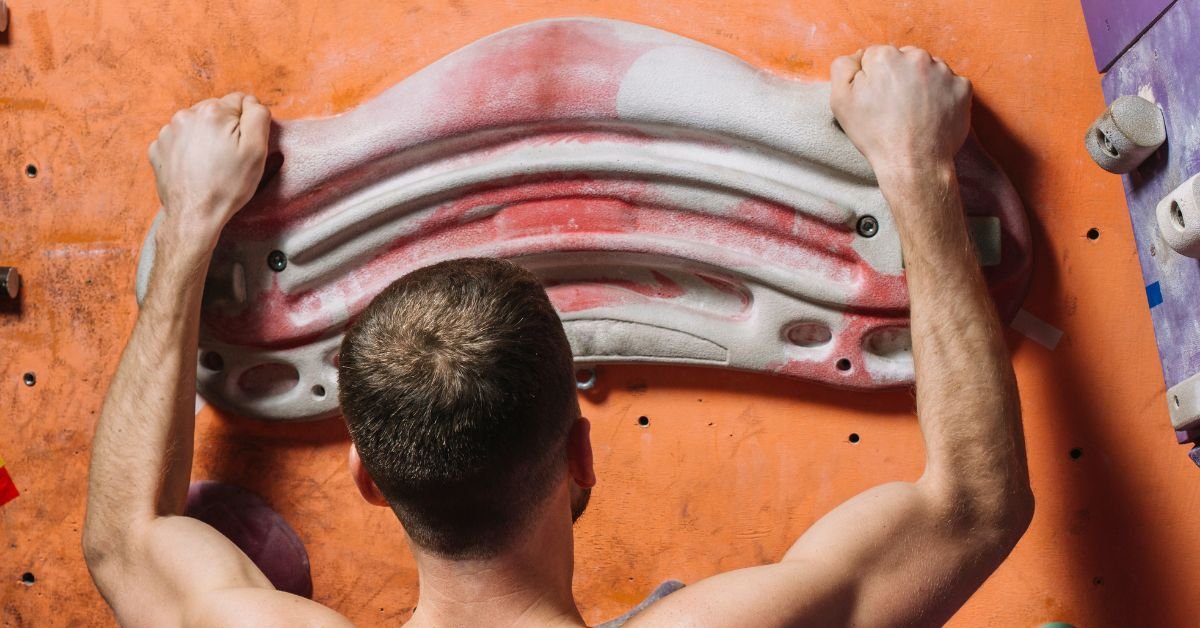
Finger strength training for climbing is the foundation that supports your entire climbing experience. Without the right strength, your grip and endurance will suffer. Ever felt that burning sensation after a few moves? That’s your fingers waving the white flag. Without enough strength, your climbing days will end prematurely due to injuries or fatigue.
This guide digs deep into the anatomy of your fingers, breaks down training techniques, and looks at recovery, tracking progress, and the common mistakes we all make.
Anatomy and Physiology of Finger Strength
Finger strength isn’t just about the fingers themselves—it’s about everything that connects them to the body. The muscles responsible for finger strength are primarily in your forearms and hands.
What Muscles Are Involved in Finger Strength for Climbing?
Your ability to hang onto a crimp isn’t magic. It’s anatomy. Every time you squeeze a hold, the flexor muscles in your forearm kick in to bend your fingers and keep them curled around the edge. These are the same muscles that protest loudly after a long day at the gym. Supporting them, the wrist flexors brace your wrist and steady the whole system so your grip doesn’t wobble mid-move.
Then there’s the supporting cast. Muscles like the flexor carpi radialis and extensor digitorum communis don’t exactly get applause, but they work quietly in the background, helping with grip and wrist stability. About half of grip strength comes from your lumbricals. Those are deep muscles of the hand that coordinate finger flexion and extension.
In fingertips-only rock climbing, the brachioradialis helps bend the elbow and ensures your grip doesn’t slip. During heavy pulling moves, it works alongside the biceps to generate force, but when you’re repositioning mid-hang or adjusting tension on a tiny crimp, it shifts gears to stabilize and smooth out the motion. The brachioradialis keeps your arm steady.
All of them rely on your tendons to transmit force. Strong muscles mean very little if your tendons can’t keep up. They’re the bridge between intention and action. Without them, your brain can scream “grip harder” all it wants, but nothing will happen. This is the hidden architecture behind every send, every lock-off, every long battle with a tiny hold.
Why Are Tendons So Important in Finger Strength Training for Climbers?
Tendons don’t usually get much attention in finger strength training, but they do most of the behind-the-scenes work. They’re the tissue that connects your muscles to your bones, kind of like the cables that let a crane lift something. Without strong tendons, all the finger curls in the world won’t help you hold onto tiny climbing holds.
That’s why you need to train them properly. When your tendons are weak or overworked, you’re more likely to end up with tendonitis, sprains, or worse—ruptures. These injuries aren’t fun, and they take forever to heal.
You also need to include finger strength training for climbing that targets your extensors, the muscles responsible for opening your hand. These often get overlooked since climbing mostly works your flexors, but they matter for balance and injury prevention. Without strong extensors, your fingers can get tight, overworked, and prone to strain. Finger strength training for climbing should build both sides of the equation so your hands stay functional, balanced, and strong.
Training Techniques for Finger Strength
Finger curls are a solid place to start when you’re building finger strength. They’re simple, low-risk, and they wake up the tiny muscles in your hands without making them freak out. Think of them like push-ups, but for your fingers. At the same time, regular hand massages and stretches can keep your fingers from turning into angry, overworked claws. So make those part of your routine early on.
Once that starts feeling easy, you can move on to dead hangs—either on a hangboard or just a pull-up bar if that’s what you’ve got. These demand more from your grip and teach your fingers to hang on for dear life.
After you’ve survived those, add repeaters and pinch grips into the mix. Repeaters will mess with your endurance, and pinch grips work the weird, sideways part of your hand strength. These drills will help you build finger stability.
How Can I Safely Build Finger Strength Without Injury?
Slow and steady wins the race, especially with finger strength training for climbing. Begin by building up the muscles in your hands and forearms. Simple moves like hanging from a bar or using a hand grip set a solid foundation. Add in finger-specific exercises, such as squeezing a rubber ball, to directly target the small muscles that matter most on the wall.
What is the Role of Hangboarding in Finger Strength Training?

One of the best ways to level up your finger strength is through hangboarding. This is a climber’s secret weapon. Hangboarding isolates the muscles in your fingers, making them stronger and more resilient. It’s especially effective for tackling challenging climbs that require a solid grip on smaller holds.
What Are the Best Tools for Finger Strength Training?
The right tools are vital when doing finger strength training for climbing. You’ll need to target specific muscle groups in your fingers and forearms. Here are some of the best tools to help you:
Hand Grippers
Hand grippers are simple but effective tools for building grip strength. They’re designed to improve hand strength by making you squeeze against resistance, a movement you’ll need a lot of as a climber.
Spring-loaded hand grips
These come with adjustable resistance levels. You can customize your training intensity as you get stronger. They’re great for forearm muscle building.
ProHands PRO Hand Exerciser (Gripmaster)
If you’re looking for something more refined, the ProHands Gripmaster has padded fingers and a larger range of motion. It also comes pre-calibrated for specific finger pressures, offering a more tailored workout.
Luxon Hand Grip Strengthener
For a no-nonsense, adjustable tool, the Luxon Hand Grip Strengthener ranges from 22 to 120 pounds, giving you flexibility in how hard you want to train.
Hand grippers are portable, making them easy to take anywhere. They’re perfect for strengthening your grip and forearms, critical muscles for climbing.
Finger Exercisers
Finger strength training for climbing benefits greatly from using finger exercisers. These tools are excellent for isolating and training the smaller muscles in your fingers and wrists. They support both flexion and extension, which is essential for preventing injury and building the kind of grip strength that climbing demands.
The Xtensor™ Finger Extension Exerciser is particularly helpful for extension resistance, which is important for keeping your fingers balanced and healthy. Overuse injuries, like tendonitis, can be avoided when you work on extending your fingers just as much as you flex them.
The Xtensor comes with five individual bands for each finger and thumb, providing a targeted approach to strengthening every digit.
Hangboards
When you feel ready to up your training, hangboards are your best friend. These are essential tools for climbers serious about finger strength. They allow you to train specific grip types like crimps, pinches, and slopers. Hangboarding can be an absolute game-changer, but it’s important to use caution.
The Metolius Simulator is a popular hangboard model used to train grip strength. It’s versatile and allows you to practice various holds.
The biggest advantage of hangboards is the ability to simulate actual climbing holds. That means you can work on the specific holds you’ll encounter on real walls. But be careful—overtraining can lead to tendon damage, so always listen to your body and never skip warm-ups.
Other Tools
You don’t need a ton of fancy equipment for finger strength training for climbing. A few basic tools can go a long way. Foam stress balls work well for grip exercises, while dumbbells or kettlebells help build overall grip strength. Pinch blocks are another simple but effective addition to your finger strength training for climbing, especially for targeting the pinch grip, a common weak point for many climbers.
What Type of Grip Should I Focus on for Maximum Finger Strength?
If you’re serious about finger strength training, focus on a half-crimp grip. It’s the most versatile and effective grip for building finger strength, and it translates well to other types of holds. That being said, change things around! Open-hand grips and pinch grips should be incorporated into your training for a balanced approach.
Start with the basics: half-crimp and open-crimp grips. Once you’ve mastered those, move on to more advanced grips like two-finger pockets and pinch grips. Training on a hangboard can help simulate real-life climbing conditions, allowing your fingers to get used to the types of holds you’ll encounter outdoors.
Be sure to warm up your fingers and wrists before starting any finger strength training for climbing. Finger rotations and stretches are essential to prepare your tendons and joints. And above all, take full rest between sets to give your muscles the recovery time they need.
How Can I Track My Finger Strength Progress Over Time?
Start with something reliable. A 7-second hang on a 20mm edge using a half-crimp grip—MVC-7 HC 20—is a solid benchmark. It’s not easy, but it gives you a clear place to begin. Use the same grip, edge, and position every time. Keep it consistent, or the numbers won’t mean much. Add weight if you need to. Record the weight and the hang time. That’s your baseline.
Come back to the test often. Weekly works. So does monthly. Write everything down—date, weight, grip, how it felt. Small changes add up, but only if you’re paying attention.
When the numbers stop moving, change the stress. Add weight. Use a smaller edge. Try repeaters, max hangs, longer isometrics. Each one teaches your body something different. The goal isn’t just to get stronger—it’s to understand what kind of strength you need, and how to train for it.
Nutrition and Recovery for Finger Strength
Your diet plays a big role in effective finger strength training for climbing. Protein is essential for muscle repair, so aim for lean options like chicken, fish, or plant-based sources such as beans and tofu. Carbohydrates are your main fuel: whole grains, fruits, and vegetables help keep you energized through intense finger strength training for climbing sessions. Don’t forget healthy fats from avocados, nuts, and olive oil. They support joint health and keep your fingers strong and injury-free.
But nutrition alone won’t cut it. Recovery is where the magic happens. Aim for 7-9 hours of sleep each night to help your muscles recover. Spread out your training sessions to avoid burning out. Recovery days are when your fingers adapt and get stronger.
Listen to your body. If your fingers start to ache, take it easy. Stretching, warming up, and cooling down will help keep injuries at bay. You’re building strength, but you’re also building resilience, so be kind to yourself along the way.
What are Common Mistakes and Myths in Finger Strength Training?
Climbers love progress, but finger strength isn’t a shortcut sport. One misstep is jumping into hangboarding too early. Your enthusiasm might be high, but if your tendons aren’t ready, you’ll feel it in a bad way.
Start lighter than you think you need, then build gradually. Slow is fast when it comes to staying uninjured. Skipping warm-ups is another favorite mistake. Your fingers aren’t thrilled about going from zero to full crimp mode. Ease them in with gentle hangs or light climbing. It matters. Progress takes time. You won’t see a leap in strength every session, and that’s fine. Zoom out.
Weekly patterns tell you more than daily noise. And don’t fixate on finger strength alone. Power helps, but poor technique and a wandering mind will waste it. Strong fingers are part of the picture. So is thinking clearly when your feet cut loose, and so is knowing when to rest. Aim for a smarter mix, not just harder sessions.
Takeaway Message
Finger strength training for climbing is rarely just about grip. It’s about patience, structure, and learning where your limits are without turning them into excuses. You’re not just yanking on holds—you’re developing a system that falls apart fast if you rush it. Some climbers chase numbers or trends, but finger strength training for climbing doesn’t answer to your ego. It responds to balance, rest, and stimulus your fingers can actually recover from.
You May also Like

Finger Strength Training: A 6-Week Program for Intermediate Climbers
Learn techniques from professional climbers on managing fear and maintaining focus when you're way above your last pad. Learn
Alex Honnold Mental Game: Overcoming Fear on High Ball Boulder Problems
Learn techniques from professional climbers on managing fear and maintaining focus when you're way above your last pad. Learn
mkamboj111@gmail.com 
The Best Quality Rock Climbing Gear List for Beginners
The rock climbing gear list for beginners includes climbing shoes, a harness, belay device, helmet,
A M