
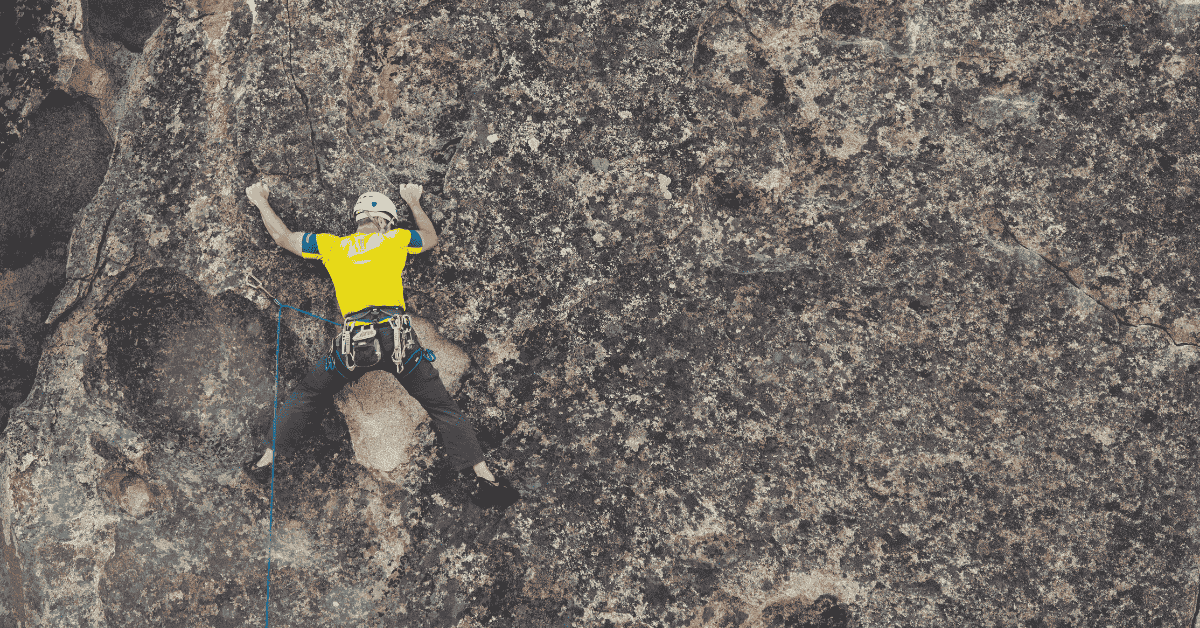
To learn basic climbing techniques easily, you need to focus on three things: body positioning, footwork, and grip. These are the skills that will keep you on the wall and help you move with control. You do not need to be strong yet. You just need to know what to do and when to do it.
This article walks you through the fundamentals: how to use your feet instead of your arms, how to shift your hips to stay balanced, and how to recognize and practice common moves like flagging, smearing, and edging. precise foot placement, staying close to the wall, and using your legs to push instead of pulling with your arms. Whether you’re brand new or just trying to climb smarter, this guide will give you a clear plan for building skill from the ground up.
Table of Contents
What Are the Fundamentals of Climbing for Beginners?
As a beginner, you must understand the difference between indoor and outdoor climbing. In indoor climbing gyms, you climb in a controlled environment. The pre-installed routes make them ideal for newbies. In contrast, outdoor climbing exposes you to unpredictable elements, such as the weather, rock conditions, and the climbing route itself. These two types of climbing offer valuable lessons. Each requires a different approach.
You’ll encounter different types of climbing: bouldering, top-rope, sport, and trad.
- Bouldering is short, powerful climbing that does not involve ropes.
- Top-rope climbing is a great place to start for beginner climbers. You’re harnessed, and the rope is anchored above for safety.
- In sport climbing, there are pre-installed bolts where you clip your rope for protection as you climb.
- Trad climbing gives you the freedom to choose where to place cams and nuts.
Climbing requires you to be aware of your body. All throughout the climb, you will need to shift your weight. You will need to use your whole body, hips, hands, and core to work together to find balance. Indeed, basic climbing techniques entail using your body’s natural abilities.
How Should You Use Your Feet While Climbing?

In basic climbing techniques, your feet provide the power. You use them to push yourself upward and maintain stability. Sure, your arms and fingers help, but proper foot placement is essential.
To do so, you must place the ball of your foot on holds. Depending on the position, you will use the inside or outside edge. In this technique, you must use your big toe to make accurate moves and hold your balance.
Smearing is another technique to pick up. When the footholds are not prominent, you’ll need to press your foot against the rock to create friction. Yes, it’s not always comfortable, and that’s why you need proper footwear. But knowing when and how to smear is a skill you must master, because in many climbs, holds will be scarce.
Be intentional with your steps. It’s a skill many beginners tend to overlook. Planning your next move is a mental skill you will need to hone. Part of it is how and when to adjust foot placements. Once you master this, you’ll conserve energy so you can tackle the tougher parts of the climb.
For footwork drills, try silent climbing. This challenge encourages precision, as it requires you to take soft, deliberate steps. Another drill to practice is precision footwork. This is where you target small footholds and work on improving your accuracy. Mastering these basic climbing techniques improves your climbing and makes it more enjoyable.
How Can You Maintain Balance on the Wall?
Maintaining balance involves positioning your body to make movements more controlled and efficient. Your center of gravity plays a significant role. Keep it close to the wall and above your feet. This helps you stay stable without wasting energy. As you move, adjust your hips to shift your weight and find a more balanced position. Leaning into the wall a little can also help distribute your weight for a smoother climb.
A fundamental technique to master is flagging. This involves extending one leg outward to counterbalance your body. Flagging helps keep your center of gravity when there’s little support beneath you. Another important concept is opposing force. Creating tension between your hand and foot placements stabilizes your body. This technique prevents you from swinging or losing control.
Your hand and foot placements affect your body tension. Correct foot and hand placement creates more stability. This approach reduces the need for muscle strength. Hence, you must learn basic climbing techniques like precision and strategic body positioning.
How to be a More Efficient Climber?
Efficient climbers do not waste their energy. They focus their efforts on proper footwork, keeping their balance, and using their core. Don’t use your arms to pull yourself up. Use them just for balance. One thing to keep in mind is to keep your arms straight. In doing so, your bones support your body instead of your muscles doing all the work. This helps save your energy.
It’s also okay to pause in the middle of a climb. Relax by leaning against the wall. If you find a good foothold, that’s a chance to rest. Give your arms a break by letting your legs support your weight. Stay calm by taking deep breaths. Focusing on your breath can keep anxiety at bay.
Pacing is also critical. Plan your moves and think ahead. Visualize where you’ll put your feet next and which holds you’ll use. Break the climb into smaller, more manageable sections. This way, you’ll be able to conserve energy and move with precision. These are the kinds of basic climbing techniques that will boost your performance. These will save your strength for the tougher sections.
How Do You Practice Basic Rock Climbing Moves Safely and Effectively?
Mastering basic climbing moves will help you climb with balance and efficiency. Here are some of the most common techniques you’ll use as you progress in your climbing:
- Backstep. Place your foot sideways on a hold, turning your body for better stability.
- Drop Knee. Rotate your knee inward while keeping your foot planted. This move helps you reach for holds without overextending.
- High Step. Lift your foot higher to gain leverage and access holds that might be out of reach.
- Mantling. Use your hands to press down on the rock, like doing a push-up, to lift yourself over the edge or ledge.
- Stemming. Press your hands and feet against two opposite walls to keep yourself steady, like you’re using both sides to hold yourself up.
- Undercling. Grab the hold from underneath. Stretch your body to get a better grip and control.
How Do You Practice These Techniques Safely and Effectively?
Mindfulness helps you train well and stay safe. Always start with a warm-up to get your muscles ready. Consult our rock climbing gear list for beginners to pick ones that let you move easily.
Be careful and accurate. Place your feet firmly, like they’re glued to the wall. Keeping your heels low help a lot. Grab the holds with a strong grip, using your fingers wisely. And don’t forget: good belaying and solid anchors keep your climb safe from start to finish.
Transform your climbing practice with these essential tips:
- Organized sessions. Have a clear goal for each practice session. Try to improve just one thing at a time. It could be learning better feet placement or getting your grips stronger.
- Climbing drills and games. Incorporate routines that help you master specific techniques. Make practice fun by trying to climb with just one hand or just a foot.
- Seek feedback. Connect with experienced climbers and ask them for advice. We suggest recording your sessions on video. Watch it or show it to experts to help you spot areas for improvement.
- Mental training. You can stop fear in its tracks by imagining yourself climbing successfully. As mentioned earlier, taking slow, deep breaths will help you stay calm when anxiety creeps in.
Try these basic climbing techniques and you’ll soon realize you’re getting better at climbing and avoiding common climbing finger injuries.
Where Can You Learn More and Track Your Progress?
Learning basic climbing techniques and tracking your progress is an ongoing process. It requires consistent effort and the right resources. So, where do you start?
- Training Logs and Climbing Apps. Use apps like MyClimb to record your climbing sessions and track your growth. These tools allow you to log each climb, assess what’s working, and identify areas for improvement. They also connect you with a climbing community.
- Join a Local Gym or Climbing Community. Local gyms are a great place to learn and practice new techniques. You’ll find opportunities to meet experienced climbers and instructors. Being part of a climbing community offers social interaction and expert advice. This can keep you motivated and on track.
- Read Our Article on Fingertips-Only Rock Climbing. Dive deep into one of the most specific climbing techniques. Check out our article on the fundamentals of fingertips-only rock climbing. Learn about the dynamics of focusing on finger strength and proper technique. It is an indispensable skill for all climbers, regardless of your skill level.
Climbing requires physical strength. But you also need the right tools, support, and techniques. You’ll find that, over time, your skills will evolve because you’ve built a foundation of the right resources.
Takeaway Message
You can’t climb smart without understanding the fundamentals. Being an efficient climber means knowing how to apply basic climbing techniques with precision and care. Keep practicing these moves until you get better control and use less energy. With practice, coaching, and the right resources, your climbing skills will improve tremendously. Keep honing your skills, push your boundaries, and be sure to enjoy every climb.
You May also Like
Boost Focus and Confidence with Mental Training for Climbers
Mental training for climbers helps you stay focused, calm, and confident in moments of stress, chall
 A M
A M 
Improve Your Performance With the Best Workouts for Climbers
Improve your climbing by following the best workouts for climbers. These workouts target exactly wha
A M 
Fingertips-Only Rock Climbing: Breaking Down the Fundamentals
Fingertips-only rock climbing, or crimping, is one of the most demanding techniques in the sport. It
A M