
Best Beginner Hangboards: Excellent Choices for Rapid Strength Gains
 A M
A M 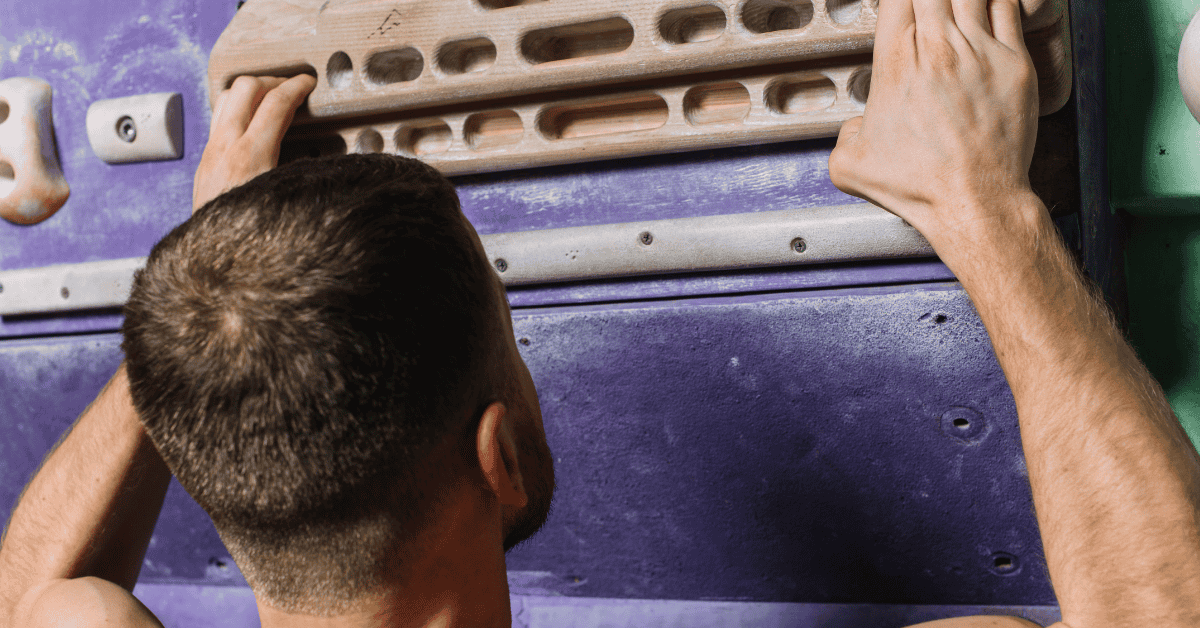
The best beginner hangboards are ones that prioritize safety, ease of use, and steady strength progression. If you are just starting hangboard training, you do not need 20 edge sizes and micro crimps. You need comfortable edges, clear instructions, and a way to build finger strength without flirting with common climbing finger injuries like pulley strains.
This guide walks you through smart, beginner-friendly options like the Metolius Simulator 3D Training Board, Tension Grindstone Trainer, and the Trango Rock Prodigy. You will learn how to choose based on your goals and setup, how often to train, and how to avoid overdoing it, especially if you’re prepping for more demanding fingertips-only rock climbing. The goal is simple: help you build a solid foundation with tools that work.
Table of Contents
1. Metolius Simulator 3D

The Metolius Simulator 3D looks a little intimidating at first. It’s wide, curved, and covered in holds. Once you start using it, the logic of the design becomes clear. The arc isn’t just for looks. It tapers outward and downward in a way that eases the pressure on your joints. The design encourages better form, especially when you’re new and still figuring out what your fingers can handle.
The surface texture deserves a mention. It’s grippy without feeling like sandpaper. This means your skin stays intact longer and your sessions can last past the first few sets. There’s a satisfying range of grips, from deep jugs to frustratingly shallow crimps. It’s perfect for progressive strength build-up without jumping straight into strain territory.
It mounts easily above a doorway or on a wall. There’s a set of instructions and even a training guide. So if you’re the type who prefers structure, you’re covered. As one of the best beginner hangboards, the Simulator 3D gives you room to improve without pushing you straight into injury.
2. Trango Rock Prodigy Training Center

The Trango Rock Prodigy Training Center was built around the training philosophy of Mark and Mike Anderson. These are two climbers obsessed with structure, repetition, and incremental gains.
The board comes in two pieces that you can adjust to suit the width of your shoulders and avoid the weird wrist angles.
Its symmetry gives it an edge over other hangboards. Every hold is planned for balance and consistency. If you want to measure your progress down to the millimeter, this board rewards that mindset. It lets you repeat, adjust, and build slowly but intentionally.
It was made for climbers who believe in systems. And if you are just starting out, that’s not a bad place to be. You can push yourself without wandering into injury territory. The board encourages you to treat your hands like something worth keeping around.
Among the best beginner hangboards, the Rock Prodigy is probably the most methodical. It does not care about flair. It cares about results. So if you enjoy tracking your improvement almost as much as climbing itself, this one fits. Literally.
3. Beastmaker 1000

The Beastmaker 1000 is the kind of board that makes you wonder how something so simple can feel so precise. It’s made from high-quality wood with a fine weave that makes it kind to your skin—no rough, blisters-for-days feel here. You can train consistently without worrying about your hands falling apart mid-session. That’s the beauty of it. It’s straightforward but engineered to last, with a wooden texture that lets your fingers connect without excessive wear and tear.
If you’re serious about gradual strength gains, this is where the Beastmaker 1000 shines. It offers controlled grip progression, meaning you can start small and, over time, build up without pushing yourself too far, too fast. It’s perfect if you’re looking to make consistent, long-term improvements.
4. Metolius Wood Grips Compact

The Metolius Wood Grips Compact is the kind of hangboard you don’t mind having around, because it looks as good as it works. Its smooth wooden finish is kind to your hands, reducing the strain you’ll often feel with harsher materials. If you’re training at home, you don’t have to sacrifice style for function. This board blends in—whether it’s in your living room or your office—yet still gets the job done.
It offers a broad range of holds, from the classic warm-up jugs to slopers, edges, and pockets. If you’re a beginner or getting into the intermediate level, you’ll appreciate the variety. You can challenge your fingers without the intimidation of super advanced grips. It’s designed to help you build finger-specific strength in a gradual, sustainable way.
For climbers in apartments or tight spaces, this board is a practical gem. It’s compact enough not to dominate your environment, yet offers enough variety to really target those finger muscles. If you’re searching for one of the best beginner hangboards, the Metolius Wood Grips Compact offers simplicity and effectiveness without taking up much space—or too much of your energy.
How to Start Your Hangboard Training Without Injury
There are a few things you can do to make sure you’re training smartly, starting with the golden rules: warm up, use the right grip, and keep your shoulders engaged. Stick to these, and you’ll avoid unnecessary setbacks.
Warm-Up to Get Your Body Ready
You can jog in place, jump rope, or do a set of jumping jacks. The goal is just to wake your body up. Once you feel a bit warmer, shift your attention to your upper body. Do a few pull-ups or push-ups using large holds. This helps activate the arms, shoulders, and back.
Your fingers need their own prep, too. Try making tight fists and then spreading your fingers wide, slowly. Add a few wrist curls, maybe a stretch or two, to loosen up those tiny joints. These bits often get ignored, and yet they’re where injuries like to hide.
Ease Into It and Don’t Rush
When you’re starting out, go for the larger holds. They’re easier on your fingers and give you space to focus on posture, breathing, and how your body feels while hanging. Keep your first sessions short to allow your tendons to adjust. Hang for 10 to 15 seconds with longer rest breaks.
As your grip gets stronger, you can slowly stretch the hang times and shorten the breaks. Training once or twice a week is plenty at the start. More than that, and you are likely to run straight into burnout.
Proper Technique for Staying Safe
- Maintain Your Posture. Retract your shoulder blades and keep them down, away from your ears. This will help avoid unnecessary strain.
- Don’t Lock Your Elbows. Keep a slight bend in your elbows to avoid overloading your joints.
- Activate Your Core. Keep your body stable by engaging your core. A slight lift of your knees helps maintain a strong position.
- Start with Open Hand or Half-Crimp Grips. Avoid the temptation to go for a full crimp right away. Open-hand and half-crimp grips are gentler on your fingers and tendons.
Listen to Your Body
If something hurts, stop. Your body is speaking and it is rarely subtle. Rest is not a reward, it is part of the training. Muscles rebuild during stillness. And if you catch yourself gritting your teeth through pain, it may be time to pause, breathe, and rethink your approach.
A Few More Tips:
Chalk is your friend, especially when your fingers start sweating halfway through a hang. It keeps you steady and focused by improving your grip where it counts. But chalk alone won’t carry you. A consistent routine is what will build your strength.
If you’re unsure where to start, asking a climbing coach can clear up a lot of guesswork. You are not expected to know everything from the get-go. And while you’re at it, track your progress. Pay attention to how long you hang, how your body feels, and what changes over time. Hangboard training is slow work by design. You do not have to rush.
Final Thoughts
Picking from the best beginner hangboards comes down to asking yourself what actually works for your space, your budget, and what you want out of your training.
Your first hangboard is less about showing off strength and more about building it, slowly and intentionally. Start with easy holds. Get familiar. Then keep going. Progress has a rhythm, and it respects patience.
You May also Like

Practical 12-Week Climbing Training Plan for the Best Results
If you’re looking for a structured way to get stronger, climb better, and stay injury-free, this 1
A M 
Boost Focus and Confidence with Mental Training for Climbers
Mental training for climbers helps you stay focused, calm, and confident in moments of stress, chall
A M 
Practical Ways to Handle Common Climbing Finger Injuries
Common climbing finger injuries happen more often than you might think, especially if you’re pushi
A M