
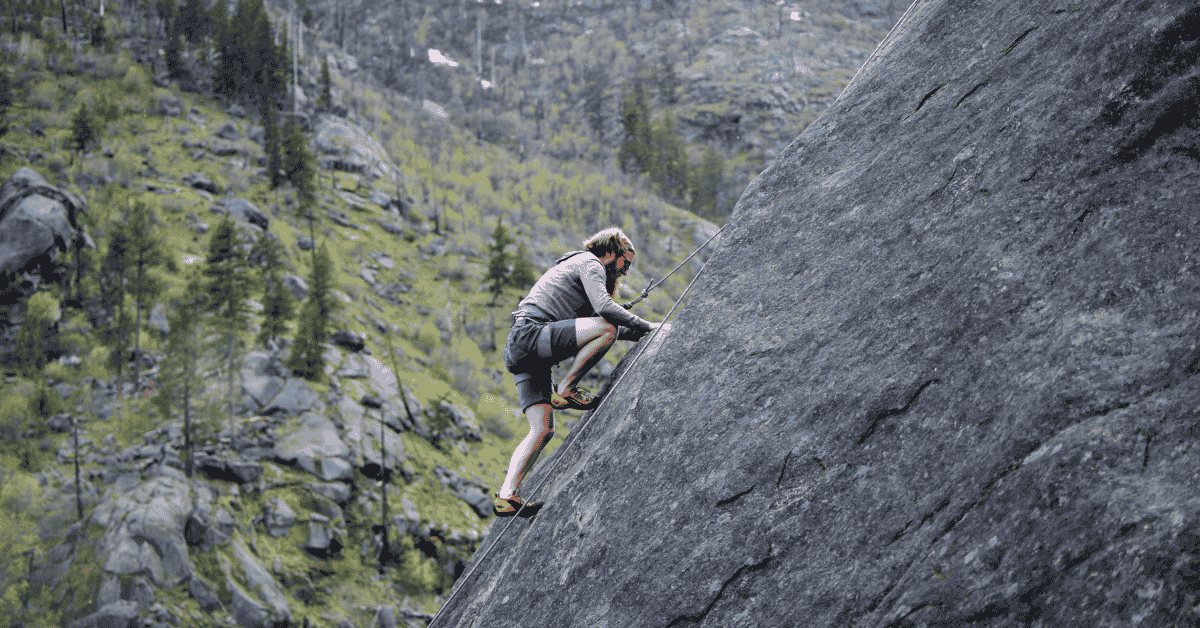
Mental training for climbers helps you stay focused, calm, and confident in moments of stress, challenge, or uncertainty. If you freeze up before committing to a move, second-guess your beta mid-route, or get frustrated after falling on the same crux again, mental training techniques can help you fix that.
You can improve your concentration with tools like breath control, cue words, and visualization. You’ll learn how to manage fear without forcing yourself to “just suck it up.” You’ll also get practical ways to build confidence, whether you’re trying your first V3 or projecting something harder.
This article covers proven strategies used by experienced climbers and coaches. You’ll walk away with clear steps you can practice starting today. Let’s get into it.
Table of Contents
How to Build Focus for Climbing
Focus is the foundation of climbing success. Without it, every move becomes a risk, and even the simplest routes can become overwhelming. Ever find yourself getting distracted mid-climb, second-guessing your next move? To stay sharp, mental training for climbers plays a key role. When you sharpen your concentration, you make more deliberate, confident choices, improving your performance and safety.
Climbers who are distracted by a task requiring heightened attention perform significantly worse. These climbers tend to take longer to ascend, as their cognitive interference slows down decision-making and movement. In contrast, non-distracted climbers maintain smoother, more efficient progress.
To enhance focus, start by practicing mental exercises like visualization. Imagine yourself completing a climb, visualizing each movement and positioning your body with precision. This mental rehearsal prepares your mind and body to respond instinctively when you’re actually on the wall. Controlled breathing is another strong weapon. By focusing on slow, deep breaths, you can quiet the mind, reduce anxiety, and regain focus when distractions arise.
Eliminating distractions is critical. On the rock, external elements including noise, weather, or even your own thoughts can pull you off track. To combat this, focus on your handholds, your foot placements, and your next move.
While physical strength is essential for climbing, mental techniques are what allow you to perform at your peak. Mental training for climbers helps you sharpen your focus, manage stress, and make quick, confident decisions, especially in high-pressure situations. Strengthening your mind can help you maintain clarity and stay grounded, even when fatigue sets in.
How to Build Confidence Through Mental Training

Confidence is crucial for climbing performance. Without it, fear and self-doubt can hold you back, affecting both your technique and your decision-making. Mental training for climbers helps you build a mindset that welcomes challenges with resilience and trust in your abilities.
One of the most powerful ways to build confidence is through positive self-talk. When you catch yourself thinking “I can’t do this,” reframe it to “I am capable of handling this.” Over time, these small mindset changes can lead to lasting changes in how you approach climbing.
Visualization is another effective tool. Before a climb, visualize yourself moving smoothly and confidently through each step of the route. Picture yourself overcoming difficult sections with ease. This mental rehearsal helps reduce anxiety and primes you for success.
Setting achievable goals also plays a key role. Break down larger objectives into smaller, manageable steps. Each goal you accomplish, no matter how small, builds momentum and reinforces your belief in your abilities.
Lastly, cultivate self-compassion. Be kind to yourself after mistakes, viewing them as room for improvement. Engage in activities that give you a sense of accomplishment, whether that’s climbing or other challenges, to reinforce your confidence and self-worth.
How to Overcome Fear of Falling and Failure
Fear of falling and failure is one of the most common mental challenges in rock climbing, but it doesn’t have to hold you back. The first step in managing this fear is to understand it. Fear is a natural response, but it becomes a barrier when it paralyzes you. So, what if you could face that fear and still keep climbing? Recognize that it’s part of your body’s survival instinct, but it doesn’t have to control you.
To overcome this, start by incorporating controlled practice falls into your training. Gradually expose yourself to the sensation of falling in a safe environment. This can help rewire your brain, showing you that falling doesn’t always mean danger or failure. With each fall, you’ll build confidence and reduce the anxiety surrounding it.
Progress slowly—don’t rush. Start on easier routes and work your way up. Celebrate small victories along the way. As you grow more comfortable with the physical demands of climbing, your fear will naturally diminish.
Mental training for climbers is essential here. Cultivate a mindset of resilience and acceptance. Accept falling as a part of the learning process, not as a setback. When you view failure as an opportunity to improve, it loses its power over you.
Self-Doubt and Negative Thoughts
Self-doubt and negative thoughts can feel like a heavy weight when you’re climbing. You might think, “I’m not strong enough” or “I’ll never make it.” These thoughts can drain your focus and sap your confidence. The key is recognizing them for what they are: just thoughts, not facts.
Start by identifying moments when self-doubt creeps in. Is it before a challenging move? Or when you’re staring down a difficult route? Once you notice these patterns, you can start to reframe them. Instead of thinking, “I can’t do this,” try telling yourself, “I’m capable of this, I’ve trained for it.” This fresh perspective can break the cycle of negativity.
Building a positive internal dialogue is essential for overcoming self-doubt. Replace critical thoughts with affirmations that support your abilities. Think back to your past climbs—what have you already achieved? How far have you come? Mental training for climbers involves practicing these positive mental techniques consistently, even when the climb feels difficult. Over time, you’ll see how much more powerful and confident you feel.
Pressure and Performance Anxiety
In fingertips-only rock climbing, the pressure to perform can feel overwhelming, especially when the stakes are high. The risks and mental demands of climbing often bring on performance anxiety, affecting your focus, motor skills, and decision-making. You might find yourself thinking more about failure than the task at hand.
The key to managing pressure is understanding how expectations affect you. Anxiety can either enhance or diminish performance, depending on how you handle it. According to processing efficiency theory, when anxiety rises, it diverts cognitive resources like attention. This can either disrupt or boost your performance, depending on your ability to manage the anxiety. In some cases, higher anxiety can lead to increased effort and improved performance. However, this requires learning how to channel that energy in a way that works for you.
Once you recognize the potential of anxiety to fuel your performance, the next step is managing it effectively, especially before a critical climb. So, how can you use that nervous energy to your advantage instead of letting it take over? Acknowledging your nervousness without letting it control you is essential. You can start by taking deep breaths to calm your mind, focusing on your preparation, and trusting in the mental skills you’ve developed.
How to Deal with Frustration and Discouragement in Climbing

Frustration and discouragement are inevitable in rock climbing. You’ve probably faced those days when progress seems impossible, or when your expectations don’t match reality.
This is a typical challenge every climber faces at some point. Climbing presents a unique blend of physical and mental puzzles, with each route offering its own set of obstacles. Sometimes, the challenge is not just the rock face in front of you, but the nagging self-doubt or the frustration of not progressing as quickly as you’d like. Whether it’s a slippery hold that throws off your confidence or a route that feels more difficult than you remember, setbacks are inevitable. But they’re also part of the intricate process of learning how to climb better.
To overcome these feelings, focus on setting realistic expectations. Understand that growth in climbing is gradual. Each step forward, no matter how small, is progress. Break down climbs into smaller, manageable sections, focusing on completing each one. This not only makes the climb feel more achievable but also provides a sense of accomplishment with each success.
Mindfulness can be an influential factor here. Instead of getting caught in frustration, practice being present. Acknowledge the challenge, but don’t let it consume you. Recognize that failure and fear are part of the process, not signs of defeat.
Turning frustration into motivation requires reframing your thoughts. Use the setbacks as opportunities to learn and grow. Mental training for climbers can help you develop resilience, teaching you how to stay focused on the process instead of getting lost in negative emotions.
How to Balance Nerves and Excitement
In rock climbing, nerves and excitement often go hand in hand. Nerves arise from the fear of failure or falling, while excitement comes from the challenge and the adrenaline rush. Both are natural, but learning to manage them is crucial for a successful climb.
Find a middle ground between nerves and motivation. Accept that some nervous energy can work in your favor. It heightens your awareness and sharpens your focus. The key is not letting the nerves take over. Instead of letting fear cloud your mind, center your attention on the climb itself and what you can control right now.
Controlled breathing is an effective way to calm the nerves. Take deep, slow breaths to ground yourself, reducing physical symptoms of anxiety like rapid heart rate or shallow breathing. This can help clear your mind and make space for clarity and concentration.
Accept that fear is an inherent part of climbing and doesn’t need to be eliminated. By accepting it, you can transform it into a source of motivation. Mental training for climbers helps you learn to take these feelings and use them to push yourself further.
How to Keep Perspective in Rock Climbing
It’s easy to get caught up in outcomes, whether it’s reaching the top, completing a difficult route, or comparing yourself to others. However, maintaining perspective means focusing on the process and your own progress instead of fixating on external results.
When you’re climbing, remember that every move you make is a part of the journey. Stay grounded by focusing on the small steps: your grip, your stance, your breathing. These details are where growth happens, not just in the summit. By embracing the challenges, whether you succeed or fail, you gain invaluable experience that contributes to your overall progress.
Managing expectations is also essential to maintaining perspective. It’s natural to want to perform well, but placing too much pressure on yourself can lead to burnout. Set realistic goals and celebrate each achievement, no matter how small. Don’t let setbacks derail your motivation. Instead, view them as opportunities to learn.
Mental training for climbers can help you cultivate this mindset. When you learn to accept both the successes and the failures as part of your growth, you can avoid becoming disheartened.
Climbing isn’t about rushing toward the finish line. It’s about navigating a series of small, often unpredictable moments requiring focus, patience, and adaptation. If you keep your attention on the present, you’ll find that the progress you make comes not from pushing harder, but from responding more effectively to what each climb asks of you
Takeaway Message
As you continue to climb, your mental game will be tested in new ways, with each challenge offering a chance to strengthen your mental resilience. To keep improving, start by incorporating specific mental training exercises into your climbing routine.
Before each climb, take a few minutes for mindful breathing—focus on slowing your breath and clearing your mind. After each route, reflect on moments when you felt distracted, anxious, or uncertain. Visualize how you would approach those moments differently next time.
Set a weekly goal to work on a specific mental skill, whether it’s reframing negative thoughts, building self-compassion, or staying present under pressure. These small steps, when practiced regularly, will help you stay focused, boost your confidence, and turn mental obstacles into growth potential. Consistently applying these techniques will make you not just a stronger climber, but a more resilient one.
You May also Like
Fingertips-Only Rock Climbing: Breaking Down the Fundamentals
Fingertips-only rock climbing, or crimping, is one of the most demanding techniques in the sport. It
 A M
A M 
How To Increase Grip Strength For Rock Climbing Quickly
If you want to know how to increase grip strength for rock climbing quickly, the most effective way
A M 
How To Learn Basic Climbing Techniques Easily
To learn basic climbing techniques easily, you need to focus on three things: body positioning, foot
A M